Pumi Bio partners with Xinhangyuan to bring biomass alcohol-based SAF production costs close to 10,000 yuan per ton.
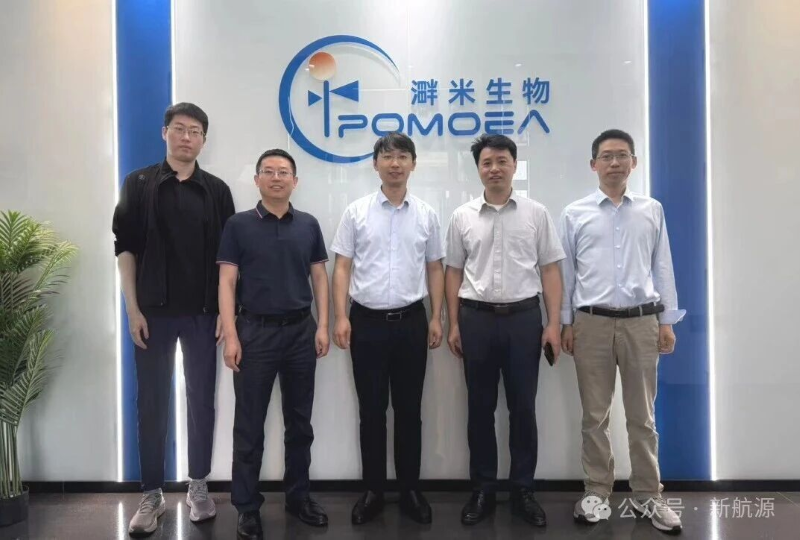
Recently, New Source (Hangzhou) Biotechnology Co., Ltd. and Suzhou Shenni Biotechnology Co., Ltd. formally signed a strategic cooperation agreement. The two parties will focus onNon-food biomass → Cellulosic ethanol → SAF and high-end chemicalsDeeply integrated to co-build a world-leading biomass SAF technology platform and industrial ecosystem.
Global Aviation Decarbonization Enters a "Mandatory Cycle"
Raw material bottlenecks drive technological revolution
The aviation sector is considered one of the hardest to decarbonize. The EU's ReFuelEU regulation, effective in 2025, mandates a gradually increasing blending rate of Sustainable Aviation Fuel (SAF) at airports; similar measures have since been adopted by the UK, Switzerland, Singapore, and other countries.
However, despite aggressive policy mandates, global SAF supply remains in a state of tight balance.According to industry statistics, global SAF production in 2025 was approximately 180-190 thousand tons, accounting for only about 0.5% of total aviation fuel consumption, leaving a significant supply-demand gap. Currently, over 80% of global SAF capacity relies on the HEFA process using waste oils and fats; limited feedstock availability and volatile prices make it difficult to support long-term scale-up needs.
Against this backdrop, using wheat straw, corn stalks, sweet sorghum, and arundo, etc."Non-food biomass-to-ethanol-to-SAF" (ATJ) pathway using lignocellulosic biomass as feedstockDue to its abundant raw material sources, non-competition with arable land, and high carbon emission reduction potential across the full lifecycle, it is regarded by the industry as the second-generation technology route with the greatest scalability potential after waste oil routes.
Powerhouse collaboration
Upstream "Sugar Platform" + Downstream "Alcohol-based Aviation Fuel"
Both companies bring unique strengths to this partnership with clear roles.
Pumi BiotechSpecializing in upstream non-food biomass conversion, we hold proprietary rights to room-temperature solid densification DLC pretreatment technology and pentose/hexose co-fermentation technology, covering the full process from "pretreatment — enzymatic hydrolysis — fermentation — distillation." Our 10,000-ton annual capacity straw pretreatment line has operated continuously and stably for 9 months, and our 1,000-ton non-food ethanol pilot plant is now operational. These solutions effectively address the challenge of converting straw into ethanol at low cost.
New SourceA downstream technology platform for alcohol-based SAF and high-end chemicals, with core strengths in our self-developed second-generation alcohol-derived jet fuel.FlexFining™ Short-Path ProcessThis technology uses alcohols such as methanol, ethanol, and butanol as feedstocks to produce jet fuel components meeting international standards via a streamlined process involving dehydration, oligomerization, and hydrogenation. The approach features short reaction pathways, high catalyst selectivity, and operational flexibility. With over a decade of expertise in alcohol-to-jet (ATJ) technology, the team has successfully integrated ATJ with PtL (power-to-liquid from CO₂) pathways.
After joining forces, the two parties will deeply integrate Baimi Bio's low-cost sugar platform with New Aviation Source's FlexFining™ process toWorld's first full industrial chain technical closed loop, covering straw collection and storage, saccharification and fermentation, to bio-aviation fuel production.。
Cost of producing SAF from biomass alcohol is expected to drop below 10,000 yuan.
As the integrated process package continues to optimize and the economies of scale from 10,000-ton-scale facilities take effect, the production cost of biomass-to-ethanol SAF is expected to rapidly converge toward competitiveness.Within 10,000 RMB per metric tonAchieve breakthroughs in both technical and economic feasibility.
This partnership coincides with a critical window for China's SAF industry to transition from "demonstration" to "scale." Although domestic SAF capacity already exceeds 150 thousand tons, the vast majority relies on the HEFA route; local non-food feedstock technologies urgently need to catch up.
The collaboration between New Air Source and Pumi Bio not only breaks through raw material bottlenecks and cost ceilings but also delivers a comprehensive Chinese solution for global aviation decarbonization.
According to the plan, both parties' mid-termDrive commercial operations of demonstration factoriesEstablish a replicable, standardized process solution with a combined production capacity reaching tens of thousands of tons of SAF equivalent. In the long term, build an industrial footprint covering major domestic biomass regions and drive international expansion of our technology solutions into global markets.EU, Southeast Asia, Middle EastWait for the global compliance market.
When the production cost of biomass-to-alcohol SAF approaches 10,000 yuan per ton,The path from vision to reality for green aviation is becoming increasingly clear and resolute.。